The best wedding content timeline starts with the moments you want to remember.
Perhaps it is getting ready with your closest friends, seeing your partner for the first time, or celebrating together once the dance floor opens. Those priorities help determine when your content creator should arrive, where they need to be, and when coverage should finish.
For weddings in Puerto Vallarta and Riviera Nayarit, that plan also needs to account for movement between suites, ceremony spaces, and reception locations.
This guide will help you build a coverage window around your celebration, whether you are considering four, six, eight, or ten hours.
Before selecting a collection, complete these two sentences:
“I want coverage to begin with…”
“I want coverage to continue through…”
Be specific. “Getting ready” could mean the entire preparation process or just the final touches, getting dressed, and reactions from your wedding party.
Likewise, “the reception” could mean your entrance and first dance, or several hours of celebration afterward.
Once you identify those moments, ask your planner for their expected times. The distance between them gives you a starting point for choosing coverage.
Then allow room for transitions and possible schedule changes.
The following schedule is an illustrative example, not a timeline from a particular wedding or a prediction for your venue.
- Preparations begin: 12:00 p.m.
- Final getting-ready moments: 3:00 p.m.
- First look: 4:00 p.m.
- Ceremony: 5:00 p.m.
- Cocktail hour: 6:00 p.m.
- Reception entrance: 7:00 p.m.
- Speeches and first dances begin: 7:45 p.m.
- Open dancing, depending on the preceding events: 8:00 p.m. onward
Using this same schedule, different coverage windows tell different parts of the story.
This window concentrates on the first look, ceremony, cocktail hour, and beginning of the reception.
Getting-ready coverage falls outside it. Speeches or first dances may extend beyond the ending time, and there is little room for open dancing.
If the first look is essential, your creator should be ready before it begins. Starting coverage at its exact scheduled time leaves no allowance for arriving, coordinating positions, or capturing the anticipation.
Four hours can work when your priorities fit within a compact window. In this example, you would need to adjust the start time, reception schedule, or priorities to create more flexibility.
This window adds final preparations and more of the reception.
It may include getting dressed, time with your wedding party, the first look, ceremony, and some dancing, depending on how the evening unfolds.
For this example, six hours connects several important chapters without beginning at the earliest preparations.
The key question is whether your must-have reception moments finish comfortably before 9:00 p.m.
This window provides more preparation coverage and a longer portion of the party.
It can also create opportunities for quieter moments before getting dressed, footage of personal details, and interactions as the day develops.
Before choosing it, check whether your desired preparations actually happen after 2:00 p.m. If an important moment takes place earlier, the window may need to shift.
This window follows the example from the beginning of preparations into the evening.
It may suit a couple who values those earlier hours and wants a broader account of the day.
However, a longer window is useful when it contains moments you want captured. If your priorities begin later, you may be better served by a later start rather than automatically choosing the earliest possible arrival.
The same wedding can support several sensible coverage choices. Your priorities determine which one fits.
A useful planning approach is to begin with the final event you definitely want captured.
If your first dance matters most, confirm its scheduled time and allow for it to finish. If you want energetic party footage, decide how long your creator should stay after open dancing begins.
Then work backward toward preparations.
For example, if your preferred ending time is 10:00 p.m., an eight-hour window begins at 2:00 p.m. A six-hour window begins at 4:00 p.m.
That simple calculation makes the tradeoff visible: a later ending within the same number of hours requires a later beginning.
Discuss the start and finish together rather than choosing them independently.
Share the preparation locations for both partners with your creator.
If you are in nearby rooms and your important moments happen at different times, one creator may be able to visit each person.
If you are preparing in separate properties, or both getting dressed simultaneously, the plan becomes more complicated.
Additional hours do not allow one person to be in two places at once.
Decide which moments matter most, coordinate their timing where practical, or discuss an additional creator if simultaneous coverage is a priority.
This conversation should happen before the wedding day.
If your tables, florals, stationery, and reception design are important to you, tell your creator and planner.
An empty reception space needs to be captured after setup is complete and before guests enter.
Ask:
- When will the setup be ready?
- When will guests have access?
- Where will the creator be during that window?
If cocktail hour and the opportunity to capture the empty reception overlap, a single creator may need to divide the time or prioritize one.
Planning that choice helps avoid discovering the conflict after guests are already seated.
A timeline should show where each event happens, as well as when.
Share room locations, ceremony and reception spaces, transportation arrangements, and any access instructions your creative team needs.
Do not assume that two spaces within the same resort can be reached instantly. Confirm the route and practical arrangements with your planner or venue coordinator.
Ask your provider how transfers are treated within the coverage window. Do not assume that time between events can be paused and used later.
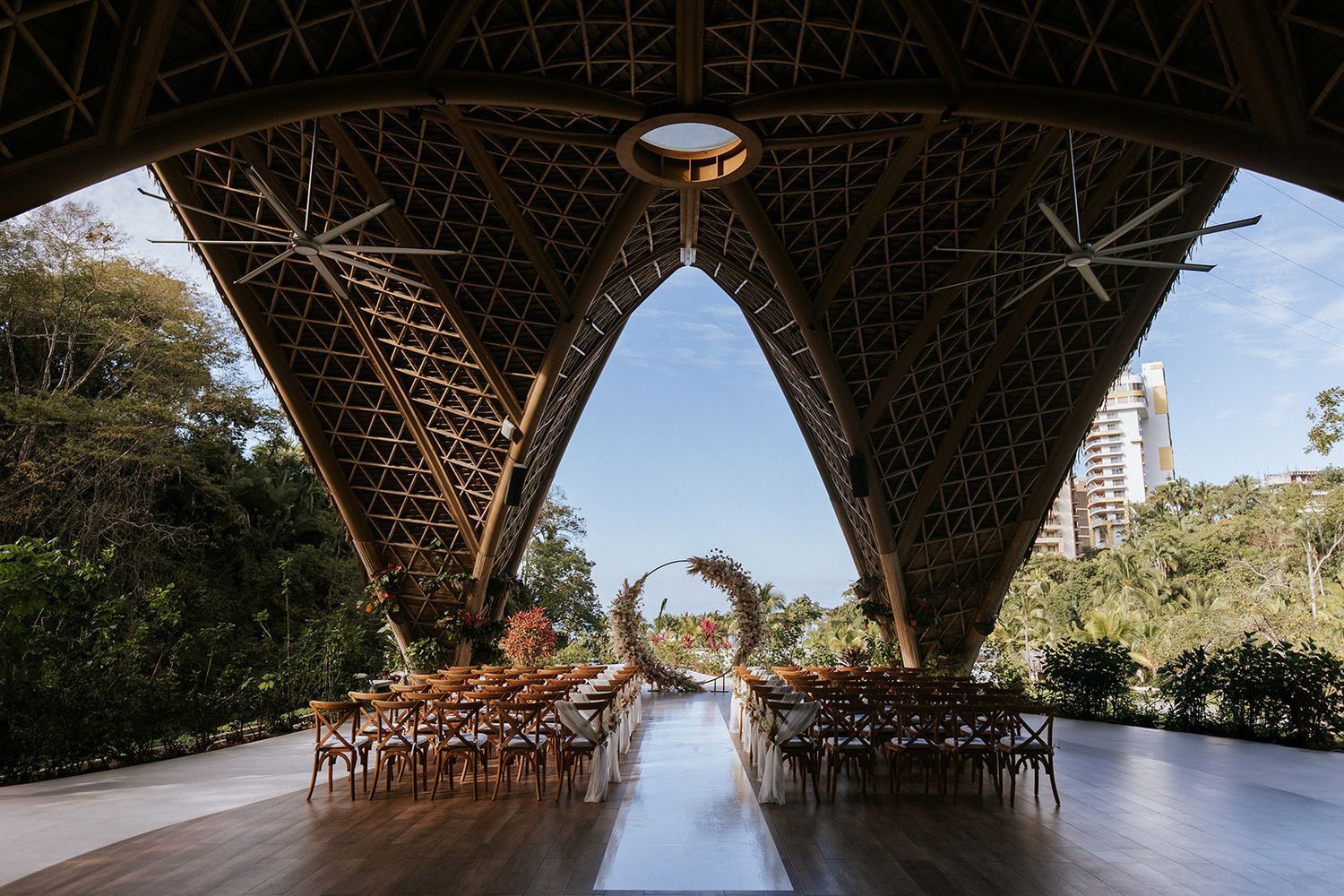
For Mackenzie and Brandon’s wedding, our coverage followed getting ready in the Hotel Mousai penthouse, the ceremony at Garza Blanca, and the reception at Tierra Luna.
That sequence shows why location details belong in the coverage discussion.
For a celebration using several spaces, we need to understand where the story begins, how the team moves to the next event, and which moments matter at each location.
Your itinerary gives us that context. The collection hours give us the window in which to capture it.
Tell your creator whether you prefer entirely candid coverage or would also enjoy a few planned videos.
If you want a wedding-party transition, a reveal, or another coordinated sequence, identify a suitable opportunity with your planner.
Getting-ready footage may need to happen before everyone leaves the room. A reception reveal needs access before guests enter. A video with your entire wedding party requires those people to be together.
A small amount of coordination can make these ideas easier to capture while keeping the celebration moving.
Share your ideas beforehand so they can fit naturally into the day.
Avoid scheduling your coverage to finish at the exact time an essential event begins.
A first dance scheduled for 8:00 p.m. needs coverage beyond 8:00 p.m. Speeches may take longer than expected, and the order of reception events can change.
Before booking, ask how extensions are handled and whether additional time depends on availability.
Once your planner finalizes the schedule, review it again with your creator. Check the first moment, the final moment, and any overlaps between them.
You do not need a finished timeline to begin the conversation. Start with:
- Your wedding date and venue.
- Preparation locations for both partners.
- Your expected ceremony time.
- Whether you are planning a first look.
- Your most important reception moments.
- How much dancing you want captured.
- Any changes of location.
- Any planned videos you would like to create.
With those details, we can help you evaluate a coverage window and refine it as your plans develop.
If you are still deciding whether the service fits your celebration, read our guide: Is a Wedding Content Creator Worth It in Puerto Vallarta?
At Vallarta Creators, we offer wedding content creation for celebrations in Puerto Vallarta and Riviera Nayarit, including Punta Mita and Sayulita.
Share the moments you want to relive and the timeline you are considering. We will help you choose coverage around those priorities.
Request Pricing & Availability
Written by José Carrillo, Vallarta Creators.